Persistent Hip Pain
Pain in the groin, thigh, or buttock that limits walking, sleep, work, or daily activities.
Hip Replacement
Hip arthritis can gradually make everyday life smaller. Walking, sleeping, putting on shoes, traveling, and spending time with family can all become more difficult.
Hip replacement is designed to relieve pain and restore function when the joint itself has become damaged and nonoperative treatment no longer provides enough relief. The decision should be based on the whole person, not an X-ray alone.

Hip replacement can be one of the most effective operations in orthopaedic surgery, but it is still a major decision.
Before recommending surgery, I work to confirm that the hip is truly the source of the symptoms, understand how the problem affects daily life, and determine whether the expected benefit justifies the risks of an operation.
When surgery is appropriate, the plan should account for anatomy, bone quality, medical health, activity goals, and the long-term demands placed on the reconstruction.
When to Consider Hip Replacement
Pain in the groin, thigh, or buttock that limits walking, sleep, work, or daily activities.
Increasing stiffness, difficulty putting on shoes, trouble getting in and out of a car, or reduced walking tolerance.
When hip symptoms begin to determine where you go, what you do, and how much of life you can participate in.
Common Conditions
Not all hip pain comes from arthritis. Pain around the hip may also arise from the spine, tendons, muscles, nerves, or other structures. A careful diagnosis matters before considering surgery.
Osteoarthritis
Avascular necrosis
Inflammatory arthritis
Post-traumatic arthritis
Femoral neck fracture
Certain developmental hip conditions

The Evaluation
Hip arthritis can produce pain in the groin, thigh, buttock, or even the knee. Similar symptoms can also come from the lumbar spine or surrounding soft tissues.
The evaluation is designed to determine whether the hip joint is truly responsible for the symptoms and whether replacement is likely to produce meaningful improvement.
The location, duration, and pattern of pain help determine whether the hip joint is truly the source of the problem.
Strength, motion, gait, and areas of tenderness help distinguish hip arthritis from problems involving the spine, muscles, tendons, or nerves.
X-rays help show joint-space loss, bone changes, deformity, and the severity of arthritis.
Treatment should reflect the severity of the arthritis, prior nonoperative care, medical readiness, and the patient’s goals.
A Different Approach to Hip Replacement
There are several successful ways to perform a hip replacement. In my practice, I use the Mayo modified anterolateral approach — a distinctive technique that preserves the posterior soft tissues while providing versatile exposure for reconstruction.
I am currently the only surgeon in the St. Louis area performing primary hip replacement using this approach. It allows me to perform the operation without a specialized traction table and without intraoperative fluoroscopy, while maintaining the ability to extend the exposure when a more complex reconstruction requires it.
Why I use the Mayo approach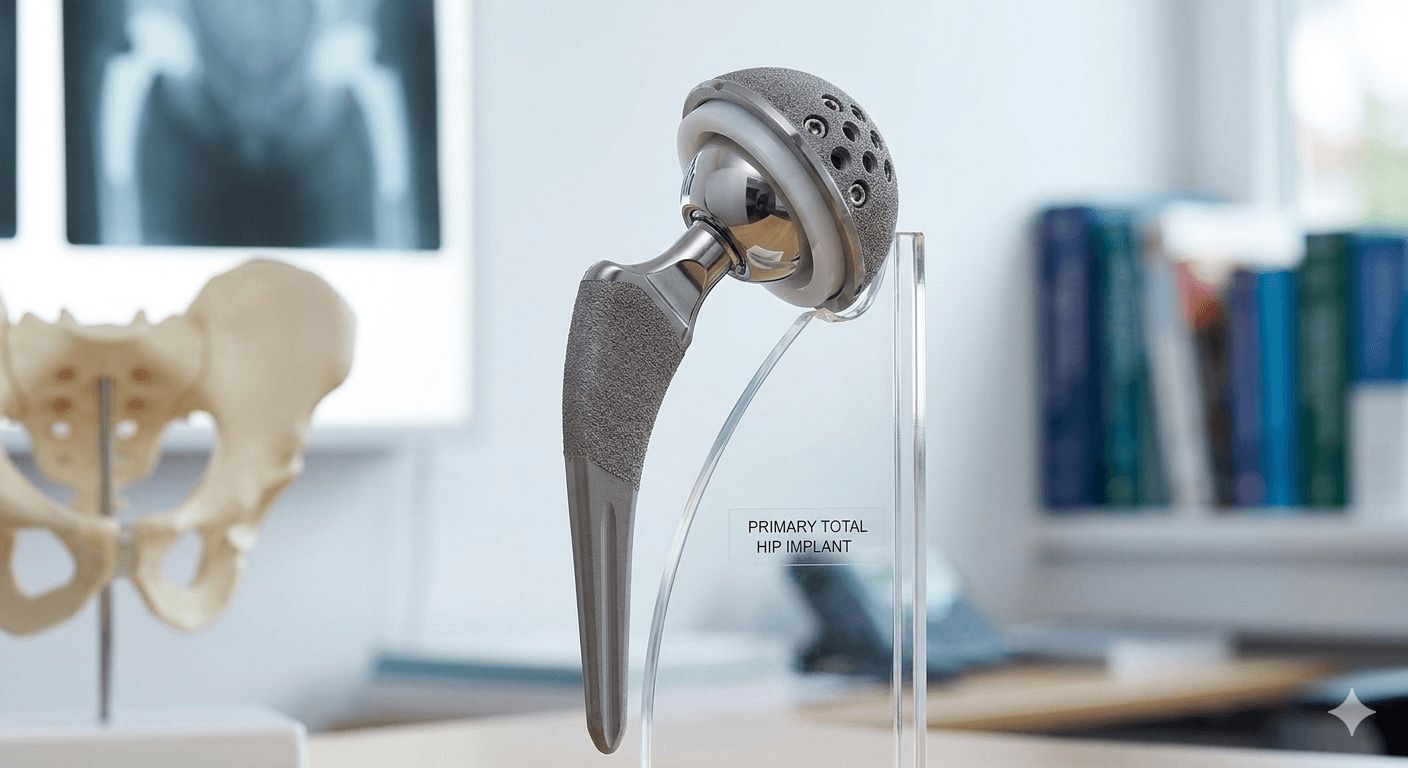
The posterior soft tissues of the hip are preserved rather than divided and repaired during the approach.
The procedure is performed without a specialized traction table, allowing the leg to be positioned freely throughout the operation.
My technique does not require fluoroscopic X-ray guidance during surgery, eliminating fluoroscopy-related radiation exposure.
The approach provides excellent exposure for routine hip replacement and can be extended when more complex reconstruction is necessary.
My goal is not to perform a hip replacement through a particular incision. It is to create the best reconstruction I can while minimizing unnecessary disruption of the tissues around the hip. The approach should serve the reconstruction — not define it.
The Mayo approach fits that philosophy. It provides the exposure needed to reconstruct the hip while preserving important posterior soft tissues, and it does not limit the operation if greater exposure becomes necessary.
Surgical Planning
Hip replacement requires more than selecting an implant. The reconstruction must restore stable mechanics while respecting the patient’s anatomy and available bone.
Restore hip center and leg length
Recreate stable hip mechanics
Protect bone whenever possible
Select fixation based on bone quality and anatomy
Choose bearing surfaces for long-term durability
Reduce the risk of instability and impingement

Outpatient Joint Replacement
Advances in anesthesia, multimodal pain management, surgical technique, and coordinated recovery protocols now allow many primary hip replacements to be performed in an outpatient surgery center.
For appropriately selected patients, surgery can often be completed without an overnight hospital stay, allowing recovery to begin in the comfort of home surrounded by family.
Every recommendation is individualized. Medical history, overall health, mobility, home support, and the complexity of the procedure all influence whether outpatient surgery is the safest option.
Many appropriately selected patients return home within hours of surgery and begin recovering in familiar surroundings.
Elective joint replacement is performed in an accredited outpatient surgery center designed around scheduled orthopedic care.
When an overnight hospital stay is the safer choice, that is the setting I recommend.
The goal is never simply to send patients home sooner. The goal is to help each patient recover in the environment that best supports a safe and successful recovery.
Recovery
Recovery varies based on age, strength, medical health, prior function, and the complexity of the operation. Most patients notice meaningful improvement early, but strength and endurance continue to develop over several months.
Most patients begin standing and walking with assistance shortly after surgery.
The early focus is pain control, safe mobility, incision care, and gradually increasing activity.
Walking endurance and confidence typically improve as swelling and discomfort decrease.
Strength, balance, and endurance continue to improve over the following months.
Setting Expectations
Hip replacement is highly effective for pain caused by advanced arthritis, but it cannot correct every source of pain or restore the hip to an untouched natural joint.
Some stiffness, weakness, swelling, numbness around the incision, or awareness of the implant may persist during recovery. Medical health, muscle condition, spinal disease, nerve problems, and prior surgery can all influence the final result.
A clear discussion of likely benefits, limitations, and risks is an important part of deciding whether surgery makes sense.
Common Questions
There is no single X-ray finding or pain score that determines the right time. Hip replacement becomes reasonable when arthritis is clearly the source of symptoms, nonoperative care no longer provides adequate relief, and the condition meaningfully interferes with daily life.
Modern hip replacements are designed for long-term durability, but no implant can be guaranteed to last forever. Longevity depends on implant fixation, bearing wear, activity, bone quality, infection risk, and other patient-specific factors.
Restoring appropriate leg length and hip stability is an important part of surgical planning. Some patients perceive a temporary difference early in recovery because of muscle tightness, pelvic position, or the correction of a longstanding deformity.
Recommendations depend on the surgical approach, implant stability, bone quality, and individual risk factors. The goal is to return patients safely to an active life while protecting the reconstruction.
Take the Next Step
A consultation can help determine where the pain is coming from, which treatment options remain available, and whether hip replacement is appropriate.
Schedule a Hip ConsultationBegin With Understanding
Whether you are considering your first joint replacement or seeking an opinion for a complex revision, every treatment plan begins with understanding your symptoms, reviewing your imaging, and discussing the options that best fit your goals.