Implant Loosening
A hip or knee replacement may lose its fixation to the bone over time, causing pain, instability, or progressive bone loss.
Hip & Knee Revision Center
A painful hip or knee replacement can be frustrating, especially when the cause is uncertain. Revision evaluation begins by determining whether the implant is truly the source of the problem and whether another operation is likely to help.
I specialize in primary and revision hip and knee reconstruction, including the evaluation of complex problems after previous joint replacement. The goal is not simply to identify that something is wrong, but to understand why it happened and build a treatment plan around that diagnosis.

Pain after joint replacement does not automatically mean the implant has failed, and revision surgery is not always the right answer.
A replacement may be painful because of loosening, infection, instability, fracture, implant wear, stiffness, soft-tissue irritation, or a problem outside the joint entirely. Each of those conditions requires a different approach.
Before recommending surgery, I work to establish a clear explanation for the symptoms and determine whether revision is reasonably likely to provide meaningful improvement.
Why Replacements Fail
A hip or knee replacement may lose its fixation to the bone over time, causing pain, instability, or progressive bone loss.
Joint replacement infection may develop soon after surgery or years later and often requires a coordinated medical and surgical strategy.
Repeated giving way, dislocation, or a sense that the joint cannot be trusted may reflect an issue with implant position, soft tissues, or joint balance.
Bearing surfaces and implant components can wear, fracture, or mechanically fail, particularly after many years of use.
A fracture near a hip or knee replacement requires careful assessment of both the fracture and the stability of the existing components.
Not every painful joint replacement requires revision, but persistent symptoms deserve a structured evaluation to identify the true source.
The Evaluation
Revision cases often require more investigation than a first-time joint replacement. The original diagnosis, prior surgery, implant design, bone quality, soft tissues, and current symptoms all have to be considered together.
The timing, location, character, and progression of symptoms often provide the first clues about why a replacement is not functioning as expected.
Prior operative reports, implant records, imaging, and treatment history help establish what was done and how the reconstruction has changed over time.
Pain around a joint replacement may come from the implant, surrounding soft tissues, the spine, nerves, infection, or another medical condition.
Additional X-rays, blood tests, aspiration, advanced imaging, or other studies may be needed before deciding whether another operation is appropriate.
Careful Planning
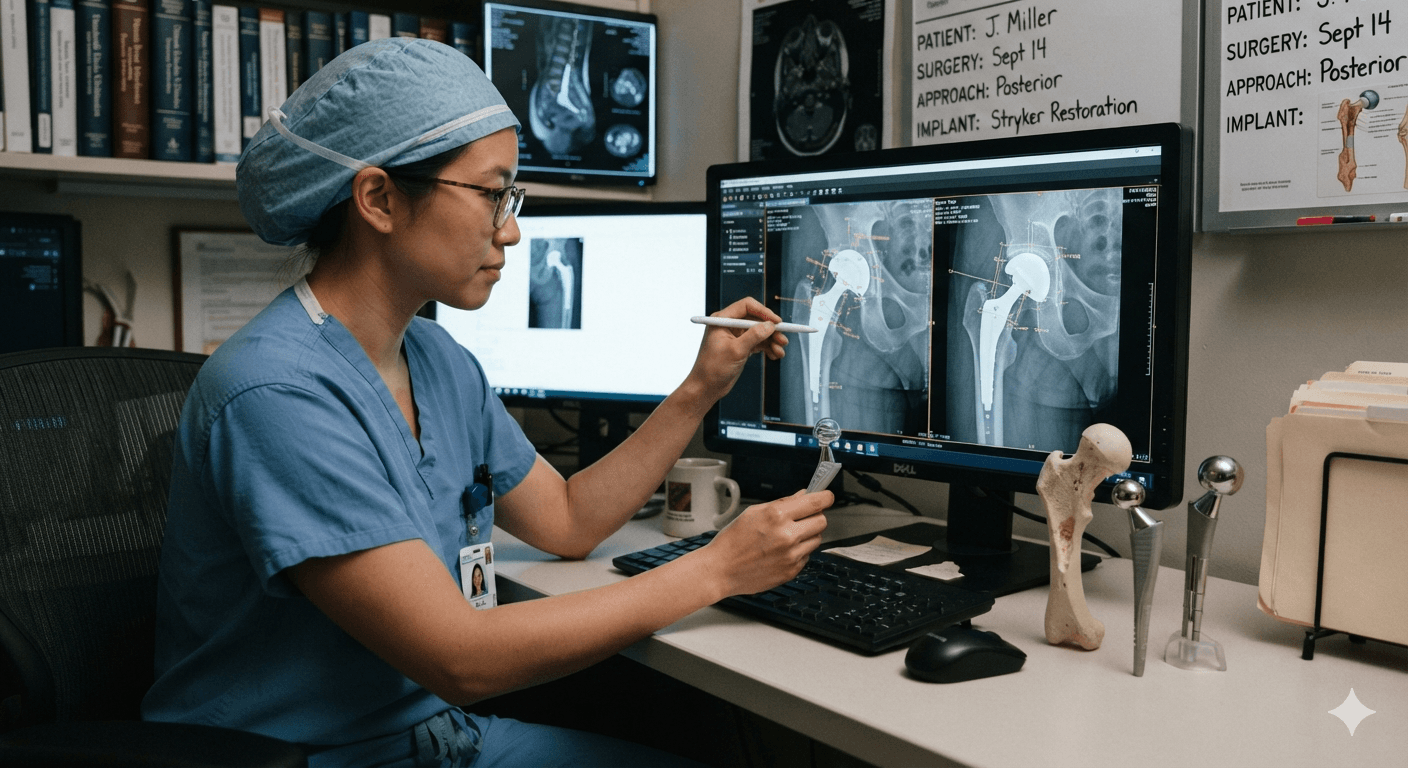
Revision surgery may require removal of well-fixed components, treatment of infection, restoration of lost bone, correction of alignment, and reconstruction of damaged soft tissues.
The available bone and supporting ligaments may be very different from what was present during the original replacement. That can require specialized implants, stems, cones, sleeves, augments, constrained components, or other reconstructive techniques.
Planning must account for both the problem that caused the first replacement to fail and the challenges created by the previous operation.
Areas of Revision Expertise
Revision surgery covers a broad range of conditions, from isolated component problems to extensive reconstruction involving bone loss, infection, or instability.
Revision total hip replacement
Revision total knee replacement
Evaluation of painful joint replacements
Periprosthetic joint infection
Recurrent instability or dislocation
Implant loosening and bone loss
Periprosthetic fractures
Complex acetabular reconstruction
Complex femoral reconstruction
Cones, sleeves, augments, and stems
Constrained and hinged knee reconstruction
Second opinions after prior joint replacement
Joint Replacement Infection
Infection around a hip or knee replacement is different from a routine skin or soft-tissue infection. Bacteria can attach to implant surfaces and become difficult to eliminate without addressing both the infection and the reconstruction.
Treatment depends on how long symptoms have been present, the condition of the implants and soft tissues, the organism involved, and the patient’s overall health. Options may include debridement with component retention, single-stage revision, staged reconstruction, or other individualized strategies.
These decisions are often made in coordination with infectious disease specialists and require careful discussion of the risks, benefits, and expected course of treatment.
Possible warning signs
New drainage, fever, or rapidly worsening symptoms should be evaluated promptly.
Second Opinions
Revision surgery is a major decision. A second opinion can confirm the diagnosis, identify additional options, or provide a clearer understanding of what another operation may involve.
Your replacement remains painful after the expected recovery period.
You have been told that an implant may be loose, worn, infected, or unstable.
You have experienced recurrent hip dislocation or knee instability.
Your symptoms are worsening but the cause remains unclear.
Revision surgery has been recommended and you want to better understand the options.
You have undergone prior treatment but still do not have a clear diagnosis.
Preparing for Your Visit
Prior records can make a revision consultation more productive. When available, bring or send:
Start With a Clear Diagnosis
A revision consultation can help identify the source of the problem, clarify the available treatment options, and determine whether another operation is appropriate.
Request a Revision ConsultationBegin With Understanding
Whether you are considering your first joint replacement or seeking an opinion for a complex revision, every treatment plan begins with understanding your symptoms, reviewing your imaging, and discussing the options that best fit your goals.