Posterior Preservation
The posterior capsule and external rotator structures are preserved rather than divided as part of the surgical exposure.
A Distinctive Approach to Hip Replacement
Hip replacement can be performed through several different surgical approaches. Each provides a different pathway to the hip joint.
I perform hip replacement using the Mayo Modified Anterolateral Approach, a technique that preserves the posterior soft tissues while providing versatile exposure for reconstruction.
I am currently the only orthopedic surgeon in the St. Louis area performing primary hip replacement using this approach.
Why I Use It
My goal is not to perform a hip replacement through the smallest possible incision or to use a particular approach because it has a familiar marketing label.
My goal is to reconstruct the hip accurately while minimizing unnecessary disruption of the tissues around it.
The Mayo Modified Anterolateral Approach fits that philosophy. It preserves the posterior soft tissues, does not require a specialized traction table or intraoperative fluoroscopy, and provides exposure that can be extended when the reconstruction becomes more complex.
What Makes the Approach Different
The posterior capsule and external rotator structures are preserved rather than divided as part of the surgical exposure.
The operation is performed on a standard operating table, allowing the leg to be positioned freely throughout the procedure.
My technique does not depend on fluoroscopic X-ray guidance during the operation, eliminating fluoroscopy-related radiation exposure during the procedure.
The same general exposure used for routine primary hip replacement can be extended when more complex anatomy or reconstruction requires greater access.
Understanding the Difference
Direct anterior hip replacement has become increasingly familiar to patients, and excellent outcomes can be achieved through an anterior approach. The Mayo Modified Anterolateral Approach reaches the hip through a different surgical interval.
Both approaches preserve the posterior soft tissues. In my practice, however, the Mayo approach allows me to perform the operation without a specialized traction table and without intraoperative fluoroscopy.
The Mayo technique approaches the hip from the anterolateral side rather than through the direct anterior interval.
Like direct anterior surgery, the posterior soft tissues are left intact.
My Mayo technique is performed without dependence on a specialized traction-table workflow.
I perform the procedure without routine intraoperative fluoroscopic imaging.
Understanding the Anatomy
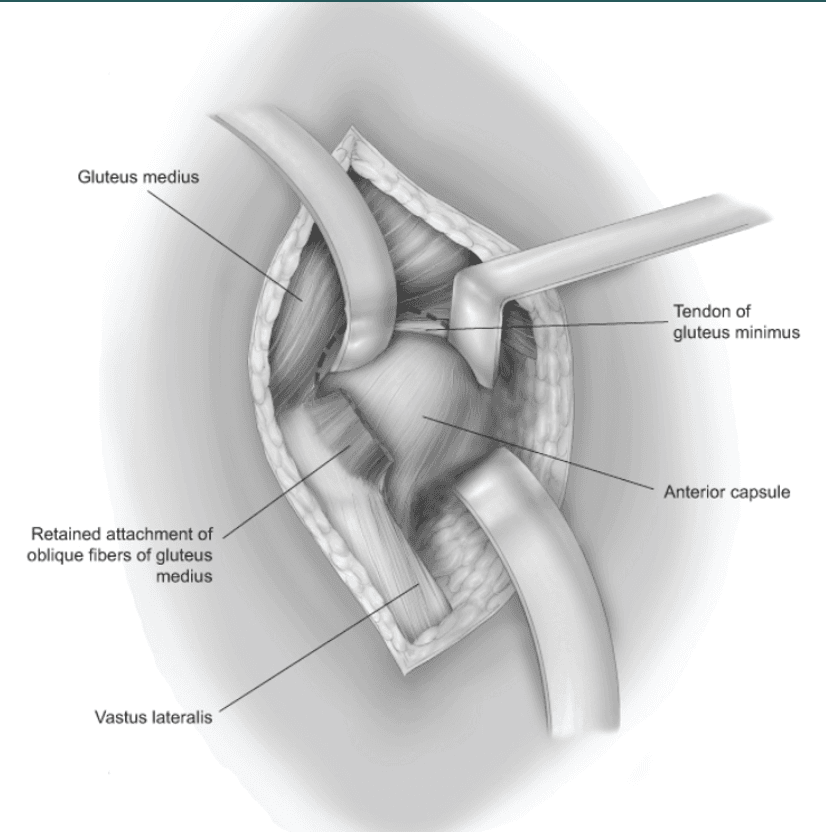
The Mayo modified anterolateral approach reaches the hip from the anterolateral side. The exposure is developed in a controlled fashion to visualize the joint while preserving the posterior capsule and external rotator structures.
Those posterior structures are important contributors to native hip stability. Preserving them is one reason I favor this approach for primary hip replacement.
That does not make the operation entirely free of soft-tissue disruption. Hip replacement remains a major reconstructive procedure, and careful handling of all tissues is essential regardless of the chosen approach.
Built for Reconstruction
Most primary hip replacements are straightforward. But anatomy, deformity, retained hardware, prior surgery, fracture, or unexpected findings can occasionally require greater exposure.
One reason I value the Mayo approach is that it can be extended when necessary rather than becoming a limitation of the reconstruction.
That same versatility is why I also use the approach in selected complex revision hip procedures.
The Surgical Process
The approach provides access to the joint. The quality of the operation depends on what is done through that access.
The first priority is determining whether the hip joint is truly responsible for the patient’s symptoms.
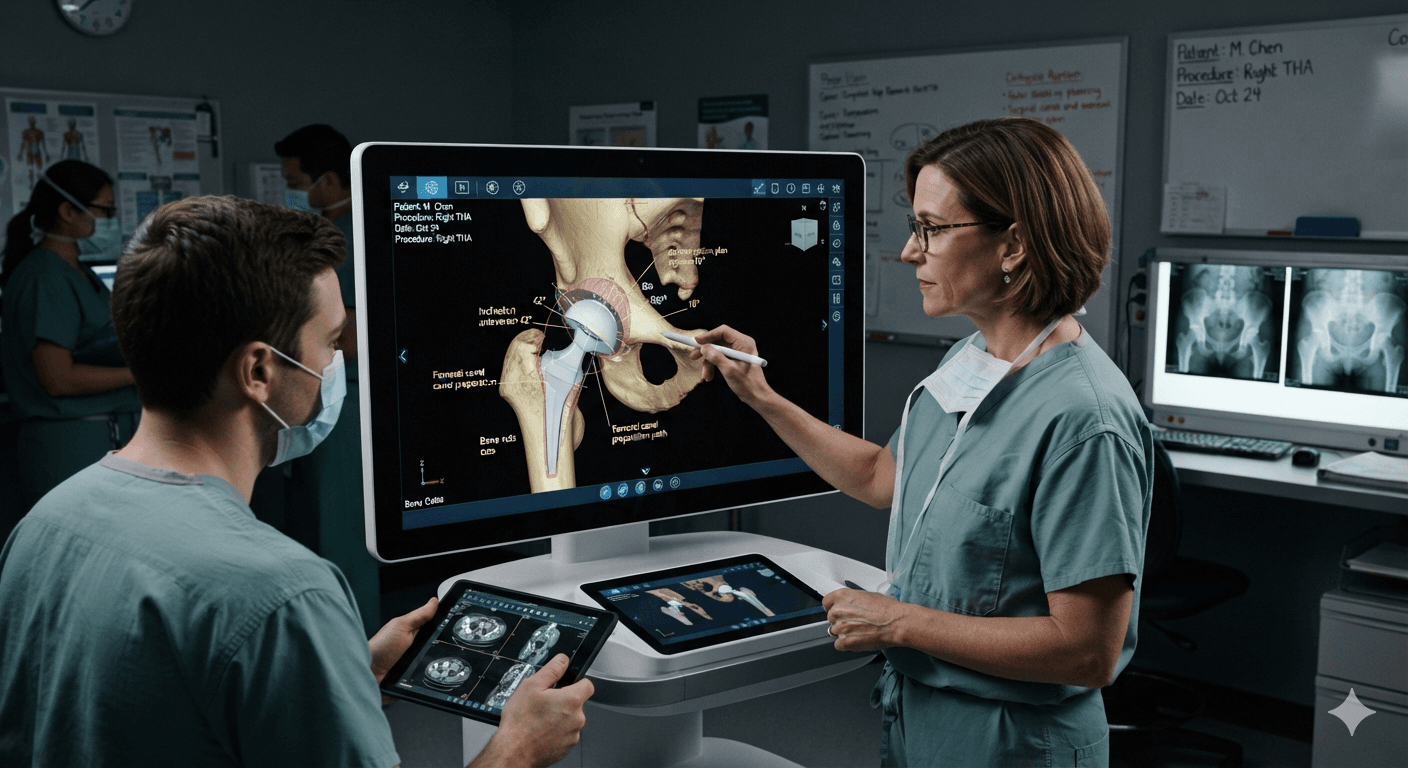
Preoperative imaging helps identify deformity, bone quality, leg-length differences, and features that may affect reconstruction.
Component size, position, fixation, hip center, offset, and leg length are considered before entering the operating room.
The incision and exposure are tools for completing the reconstruction. They are not the goal of the operation.
More Than an Incision
Hip replacement changes the relationship between the pelvis, femur, muscles, and spine. Restoring those mechanics requires more than placing components within acceptable ranges.
I consider hip center, leg length, offset, component orientation, bone quality, fixation, and soft-tissue tension as parts of one reconstruction.
The surgical approach must provide enough visualization to make those decisions accurately and execute the plan safely.
Learn about hip replacement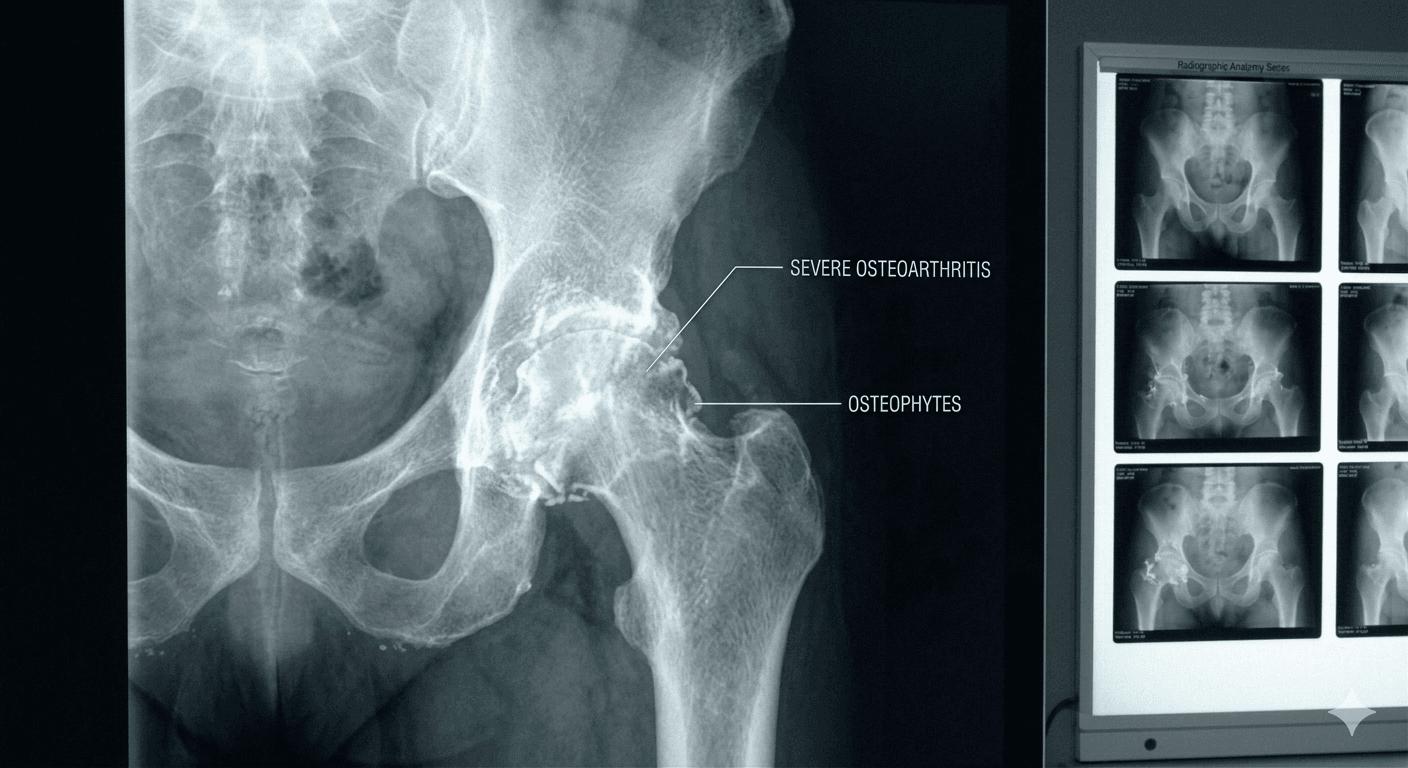
Recovery
It is natural to ask whether one approach will make recovery faster or easier. The operative exposure can influence early symptoms, but it is only one variable.
Severity of arthritis
Bone quality and anatomy
Muscle strength and conditioning
Medical health
Prior hip or spine surgery
Complexity of the reconstruction
Keeping the Approach in Perspective
Surgical approach matters, but it is only one part of a successful hip replacement. Component position, restoration of leg length and offset, implant fixation, soft-tissue handling, stability, medical optimization, and postoperative recovery all contribute to the result.
Several established surgical approaches can produce excellent hip replacement outcomes. I use the Mayo Modified Anterolateral Approach because its combination of posterior preservation and versatile exposure fits the way I perform hip reconstruction.
“The best approach is the one that allows the surgeon to perform a safe, accurate, and stable reconstruction consistently.”
Common Questions
No. Both approaches access the hip from the front or side rather than through a traditional posterior exposure, but the operative intervals, patient positioning, visualization, and surgical technique are different.
The approach uses an anterolateral exposure while preserving the posterior soft tissues. However, terms such as “muscle-sparing” can oversimplify what occurs during surgery. Every hip replacement requires careful handling of muscles, tendons, capsule, and bone.
No surgical approach can guarantee a particular recovery. Early progress is influenced by baseline strength, medical health, the severity of the arthritis, surgical complexity, pain response, and patient participation in recovery.
Postoperative recommendations are individualized. They depend on implant stability, bone quality, soft-tissue condition, anatomy, and anything unusual encountered during surgery.
Preserving the posterior soft tissues may contribute to stability, but no approach eliminates the possibility of dislocation. Component positioning, soft-tissue tension, anatomy, patient factors, and postoperative behavior all matter.
Surgeons choose approaches based on their training, experience, patient population, and the technique they can perform most reliably. Excellent hip replacements can be performed through several established approaches.
I am currently the only orthopedic surgeon in the St. Louis area performing primary hip replacement using the Mayo Modified Anterolateral Approach. I use the approach for routine primary hip replacement, and its extensile capabilities can also be useful in more complex hip reconstruction.
A Unique Option in St. Louis
I am currently the only orthopedic surgeon in the St. Louis area performing primary hip replacement using the Mayo Modified Anterolateral Approach.
The goal is not simply to choose the name of an approach. It is to understand how your surgeon plans to reconstruct your hip, why they use the technique they do, and whether that philosophy makes sense for you.
Schedule a Hip ConsultationBegin With Understanding
Whether you are considering your first joint replacement or seeking an opinion for a complex revision, every treatment plan begins with understanding your symptoms, reviewing your imaging, and discussing the options that best fit your goals.